


Meet Lynn Dean
- Lynn Dean
- Feb 2
- 7 min read
You’ve written a variety of books, from historical fiction to homeschool guides. How do you balance writing in different genres, and what does each genre bring to your writing process?
My first professional writing project was a Texas History curriculum — a guided unit study, really — called Discover Texas, but I originally wrote it for use with my own children. I really disliked Texas History at the time, but my husband insisted it was only because I hadn’t been taught how to understand the adventure of history. History has the same elements as any good story — somebody wants something, but the obstacles they must overcome to achieve their goals seem overwhelming. They try repeatedly and fall short, face dark moments when all seems lost, and finally become bold enough to dare the one thing that miraculously works. So that’s how I wrote Discover Texas, with Cliff Note-style overviews, lots of curated links for discovery learning, exciting make-and-do projects, videos and library books and field trip ideas so kids can get their hands dirty in the dust of history and figure out how it all led us to where we are now. It’s how we learn...and, I learned, it’s what makes historical fiction meaningful, as well.
Your novels, particularly the Sangre de Cristo series, are deeply rooted in Texas history. What inspired you to write stories set in the American Southwest, and how do you incorporate historical accuracy into your fiction?
My first novels, which make up the Sangre de Cristo series, were drawn from stories and interesting historical tidbits I encountered while researching Discover Texas. I asked myself what it might have been like to live through all those experiences, how it might affect my characters, and what spiritual lessons they might have learned.
I’ve since branched out from those roots in Texas and American Southwest history, but the common element in everything I write is deep research and a spiritual perspective...without being ‘preachy’. (Caveat: My heroine in More Precious Than Gold was a preacher’s daughter, so she’s understandably more forward in her faith, but she also struggles, as we all do, to understand why a loving God would allow the hardships she faces).
From my observation, historical fiction readers fall into two categories: those who enjoy historical fiction for the nostalgia of a ‘simpler’ time (even though it often wasn’t), and those who enjoy learning from a realistic and well-researched story. Both are valid, but I write for those who like a good story that teaches them interesting and accurate things. To avoid the dreaded ‘info dump’, I do my research up front, learning everything I can about the world and characters I’ll be creating for my readers. If the story takes place in Scotland, I want to be able to tell them what heather smells like. Modern and historical characters often share similar desires, but they have vastly different expectations. For example, women throughout history may hope to find love, but a 16th-century woman may not have had any say in the choice of her husband. Both hope to have healthy and happy children, but in the 1800s one in four births resulted in the death of the mother and/or baby, and women even as recently as the early 20th century fully expected to lose one or more children to hardship or disease. Such realities affected the way they thought about life and death and what they even allowed themselves to dream of and fight for. Knowing and understanding these things helps me write events and characters that feel real.
Your book More Precious Than Gold was a finalist for the Faith, Hope, and Love Touched by Love award, and Stronger Than Mountains won a Will Rogers Medallion Award. How has your success in the awards arena influenced your writing journey?
I suspect we all have a touch of ‘Imposter Syndrome’, wondering if we really have what it takes to do what we do and be good at it. As an Indy published author, my success in the awards arena is what gives me the courage to keep writing. Knowing that both readers and other experienced writers connect with my stories helps me quiet my ‘inner critic’.
One of your most recent contributions, A Hill Country Christmas~Hope for Hardscrabble Times, has earned a Selah Award and a Will Rogers Medallion Award. Can you tell us more about this book and the inspiration behind it?
Since I live in the beautiful, rugged Texas Hill Country, and also since I’ve come to know rather a lot about Texas history, a writer friend (Gail Kittleson) asked me if I would act as a tour guide for her research trip.
When her book was published, I again chauffeured her around the Hill Country for her speaking engagements at libraries and museums in our region. It was a ton of fun! At every event, people were excited to share stories about things that had happened in the history of their own communities. Gail and I wanted to collect their stories and add a few others to preserve the colourful tapestry of this region’s history. It seemed to us that a Christmas anthology would be a heartwarming theme that would give several writers an opportunity to join us. So that’s what we did.
We had nine months to write and edit the stories, find a local printer, and plan another launch. Though I’d published my own stories before, I also needed to form a small publishing company so we could navigate sales taxes, royalties, etc. It was kind of a lot...but we made it!
The first anthology, A Hill Country Christmas~Hope for Hardscrabble Times came out in 2022 when people were so weary from our own hardscrabble experiences with Covid. I’d never worked as part of a group of writers before, but we had a great time, formed lasting relationships, learned a lot, and our book enjoyed a warm reception at libraries, book clubs, museums, gift shops, and even at a couple of hotels and businesses in the Hill Country region. We invited a few more authors and produced a companion anthology, A Hill Country Christmas~Truths for Troubled Trails, in 2023.
Now that this same resilient region is recovering from horrendous flooding, I’m wondering if it might be time for a third and final anthology for 2026. What do you think?
Your latest book, The Lover’s Bridge, is part of the 14-book Our House on Heather Wynd series. What can readers expect from this story, and how does it tie into the larger series?
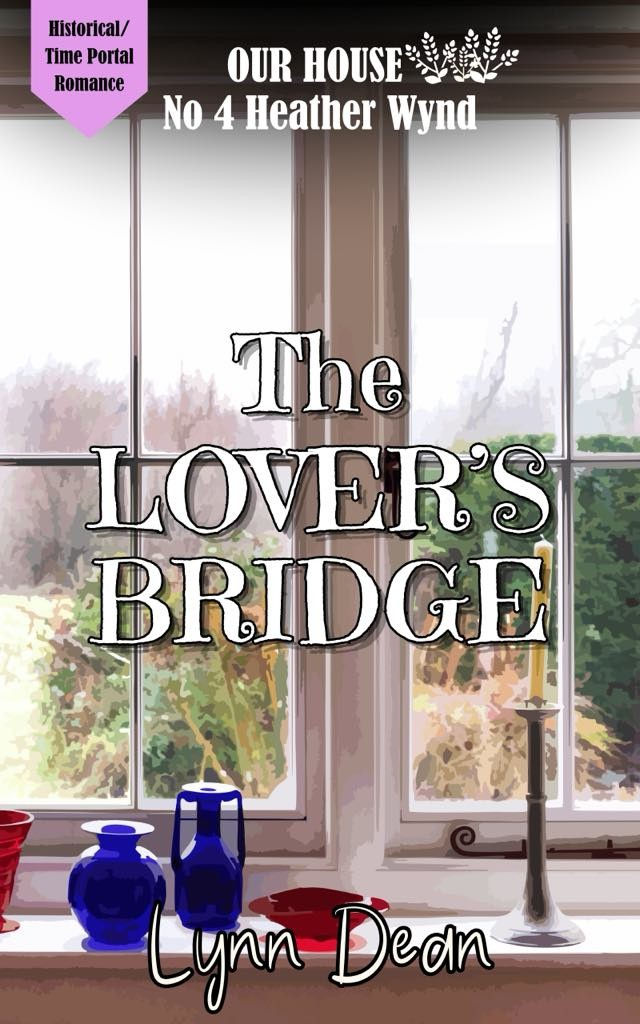
One of the things I’ve always loved about reading in general and historical fiction, especially, is the way a good book can transport you to another place and time. When I was a young teen, I used to read Laura Ingalls’ Wilder’s book, The Long Winter, during our Texas summers because reading it made me forget how hot it was and literally shiver. As a Time Portal Romance, The Lover’s Bridge is my first foray into time travel stories...but it won’t be my last.
My main character is a historical restoration contractor. In a single weekend, Thom loses everything — his home, his business, and his fiancée. Embarking alone on what was to have been his honeymoon in the Scottish Highlands, Thom hopes to regain his footing and figure out what comes next, but what he discovers is an opportunity that’s beyond anything he ever imagined.
The series, Our House on Heather Wynd, is a collection of standalone stories in an assortment of genres written by a group of international authors. Each story takes place in the houses on Heather Wynd in the fictional Highland village of Bieldfell. Readers will find fun links and features connecting the stories in this series and also to last year’s series, Our House on Sycamore Street.
You’ve been writing for many years, and your Discover Texas curriculum has been a key resource for Christian homeschoolers for 25 years. How has your experience as a curriculum creator influenced your approach to writing fiction?
I think the main influence was the realisation of how deeply we humans relate to stories of other struggling humans. Whether it’s a school curriculum or a novel we read for entertainment, we’re interested in other people’s lives, their dreams, and their challenges. We relate to their struggles and long to know that there’s a purpose to our lives — some noble cause that makes it all worthwhile. We enjoy books that let us see through another person’s eyes and experience vicariously what they’re going through. We hold our breath and read faster to help them through their challenges, and we celebrate their victories as if they were our own. That’s the experience I try to capture as a writer.
You mention that your husband inspires most of your heroes. Can you share more about how he influences your character development and the types of heroes you create?
Oh, this is a great question! I don’t think anybody’s ever asked me that before, but the character of Thom Davidson in The Lover’s Bridge is very much based on my husband, Tom. He’s a man of integrity, loyal to a fault, who truly enjoys serving others. Like many men, he may not talk much to people he doesn’t know well, but he feels deeply. He’s capable and usually a good judge of character...except he sometimes gives the benefit of the doubt to someone who doesn’t deserve it, and that disappoints him, because he’d thought better of them. Still, he loves God and lives like he means it, so he goes right on doing the right thing and going out of his way to keep his promises and help whoever needs a hand.
I am blessed!
Living in the Texas Hill Country sounds like it offers a lot of inspiration. How does your environment influence your stories, and do you draw upon local history or landmarks in your work?
The Texas Hill Country has been in the news a lot lately since the cataclysmic 4th of July flooding, and in many ways the response demonstrates the essence.
This is a region with a deep and varied history and lots of cultural layers. Towns have names like Boerne (German) and Helotes (Spanish), and villages with names like Grit and Loyal Valley speak to the determination and character of the people.
The Hill Country is beautiful, but it’s also rugged, and situations can become dangerous faster than you would imagine. We have rattlesnakes, scorpions, fire ants, mountain lions and wild boars. We have blue northers, tornadoes, droughts, and flash floods. In the summer it can get almighty hot, and we get barely enough rain each year to survive...and then 14 inches all at once. The people are resourceful, resilient and big-hearted (even by Texas standards). They trust God because they recognise their dependence on His help. Beyond that, they’re self-reliant almost to a fault, but if a neighbour needs help, they’ll be there, showing up quietly wearing work boots and carrying a shovel.
While I do draw on local history and landmarks when it’s appropriate, the primary influence of living here is that it’s taught me how the environment can become a character and a source of conflict in my stories.

Follow Lynn on Facebook at: https://www.facebook.com/LynnDeanThorntonRidgePublishing
or check out her websites at: https://thorntonridgepublishing.com/


Comments